
By Nathan Kiwere
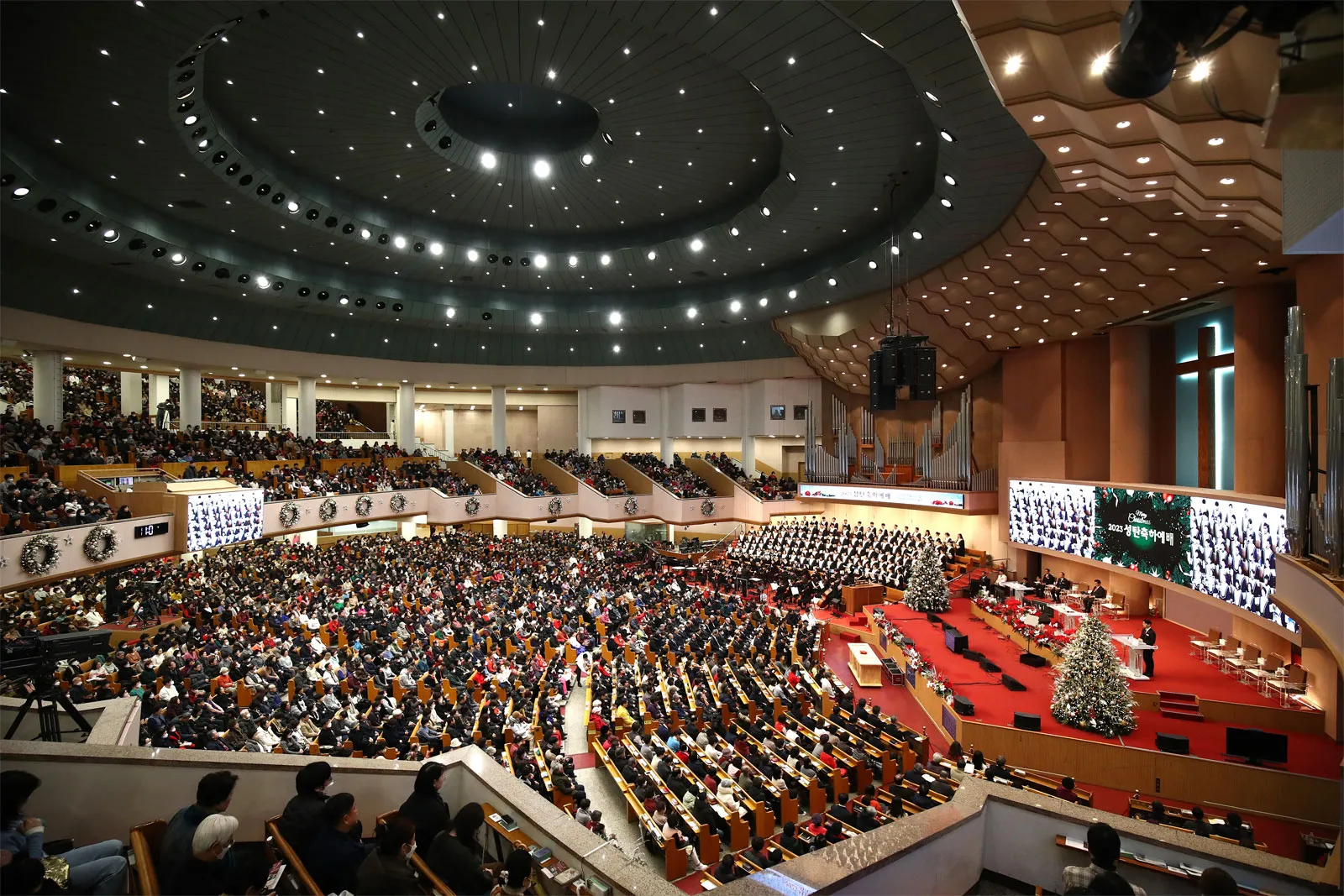
On a bright Sunday morning, the air vibrates with excitement. A vast sea of worshippers streams through the gates of a colossal church complex. They move in waves — young and old, dressed in their Sunday best — toward a sanctuary that could easily double as a sports arena. The atmosphere is electric: flashing lights, tight harmonies, a live band in full swing, and a production team managing every camera angle with cinematic precision. It is an experience that feels less like a traditional church service and more like a grand concert.
In this dazzling display of organization and excellence lies one of the most remarkable stories of the African Church in recent decades — the rise of mega churches. From dusty village chapels to multimillion-dollar sanctuaries, the Christian faith on the continent has undergone a massive transformation. Africa, once considered a mission field, is now a major mission force, exporting preachers, worship music, and spiritual influence across the globe.
But beneath the bright lights and towering auditoriums lies a quiet question echoing through the heart of the faithful: Has the faith grown as large as the buildings, or have the buildings outgrown the faith?
The paradox of growth
The rise of mega churches in Africa represents both a triumph and a tension. On one hand, these congregations have redefined excellence in ministry. They have mastered the art of administration, branding, and community outreach. Their humanitarian arms build schools, hospitals, and orphanages; their media houses beam messages of hope to millions. They are centers of inspiration for a generation that desires to see faith in action.
Yet on the other hand, this impressive growth sometimes overshadows the simple essence of Christian discipleship — the quiet, personal transformation that happens when a believer learns to walk closely with God. In the race to build bigger, reach further, and trend higher, the focus on nurturing individual faith often fades into the background.
Consider the young believer who joins a large congregation seeking spiritual mentorship. Amidst the crowds and programmed events, she soon discovers that her relationship with God feels impersonal, almost administrative. She has access to sermons, conferences, and live streams, but little space for genuine accountability or pastoral care. Her faith grows wide but not deep. She knows the slogans of her church but not the Scriptures that should anchor her soul.
The show and the substance
African Christianity today is full of dazzling expressions — fireworks of faith, as some might say. Worship is exuberant, sermons are fiery, and testimonies abound. But a closer look reveals a subtle shift from substance to spectacle. The pulpit has, in some cases, become a stage, and pastors have become celebrities.
The danger here is not in the beauty of excellence itself — God delights in order and creativity — but in the risk of mistaking performance for presence. When the church becomes more of a production than a place of encounter, believers may learn to admire rather than to abide. The heart of the Gospel, which is personal transformation through the cross, can easily get lost in the choreography of modern worship.
There was a time when church meant gathering under a mango tree with a handful of believers, sharing testimonies and studying the Word together. The songs were simple, the prayers raw, and the faith genuine. Today, even as we celebrate progress, one cannot help but ask: have we traded intimacy for influence?
The Forgotten art of discipleship
True discipleship is not glamorous. It is often hidden, slow, and inconvenient. It involves walking with people through their struggles, doubts, and temptations. It demands time, patience, and personal sacrifice — qualities that cannot be automated or mass-produced.
In many mega congregations, however, the structure itself makes personal discipleship difficult. With thousands of members, it becomes nearly impossible for pastors to know each congregant personally. The result is a system that focuses more on attendance than accountability, more on events than on spiritual maturity.
Yet this challenge is not insurmountable. Some growing churches have rediscovered the power of small groups — intimate fellowships within the larger body where believers study the Word, pray together, and hold one another accountable. In these circles, authentic Christian growth takes place quietly, away from the spotlight. It is here that faith becomes more than a Sunday performance; it becomes a daily walk.
Building upwards and inwards
The future of the African Church may well depend on how it balances growth with depth. Numerical expansion is good, but spiritual maturity is essential. A large congregation without mature disciples is like a tall building without a foundation — impressive but fragile.
The call, therefore, is not to abandon growth but to redefine it. Growth should not only be measured by the size of the crowd but by the strength of character. A church’s success should not only be judged by how many people attend its services but by how many lives reflect the nature of Christ in their homes, workplaces, and communities. As one wise elder once put it, “The true measure of a great church is not how many come in, but how many go out changed.”
The story of Africa’s mega churches is a story of divine possibility — proof that God can raise a mighty movement from humble beginnings. But every move of God carries within it the temptation to lose sight of the original fire. The challenge for this generation is to preserve the simplicity of faith in the midst of abundance.
Perhaps the answer lies not in choosing between mega and micro, but in blending the two — a big vision anchored in small, faithful steps. The Church must continue to dream big, build big, and reach wide — but never at the expense of the personal, intimate walk that keeps faith alive.
When the lights dim and the crowds disperse, what remains should be a faith that is personal, rooted, and unshakable. For in the end, God is not impressed by our buildings, but by our becoming.
Leave a Reply